


Pssst: I’m going to let you in on a little parenting secret. What if I told you the ultimate Jedi mind trick to teach your preschooler essential communication and social skills while you play with them? It just takes a little intention, and trust me: they won’t even know it’s happening. By incorporating these key tools into your play routine, you’ll build the communication and language skills they need while also decreasing behavior challenges. Sounds like a win-win, doesn’t it?
A child’s brain is rapidly developing, and our daily interaction is what helps shape and mold how they see and engage in the world. All toddlers engage in impulsive behavior, demand more independence, and are learning about boundaries. As their caregivers, we often wonder if we are doing enough (spoiler alert: we are), and naturally, we wonder if we could be doing more to support their development. After all, in our role as caregivers, we are growing and learning just as much as they are.
There is no better way to teach and integrate these skills than during your natural play time. Add these 6 tools to your parenting arsenal and organically build your toddler’s communication, social, and self-management skills.
1. Attention
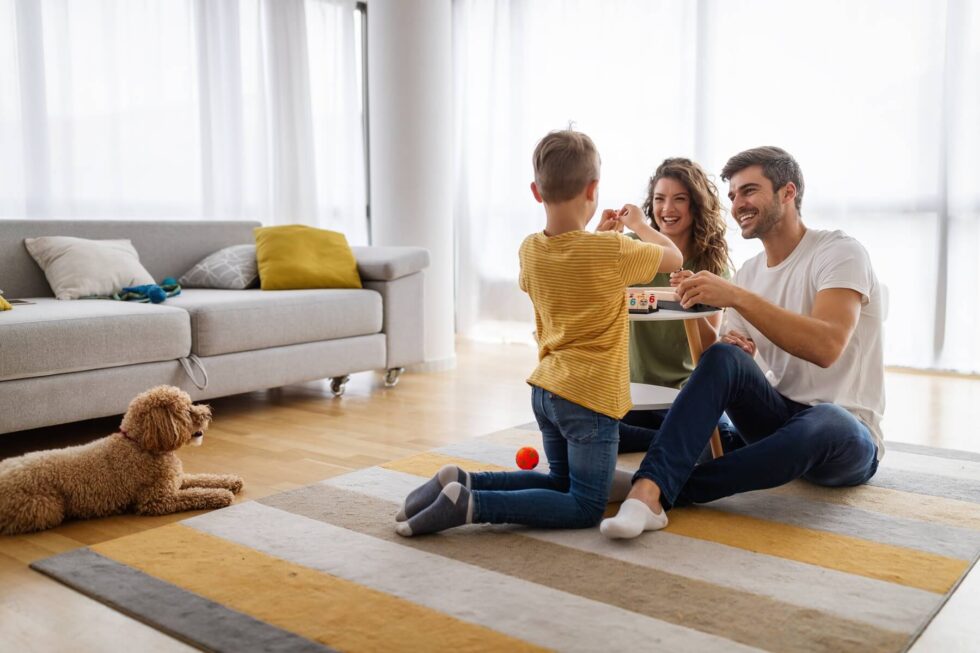
Without your child’s attention, minimal learning opportunities are going to happen. The best way to keep and sustain a toddler’s attention is to get on their level and meet them where they are. Literally. If they’re on the floor, then you get down there with them and sit face to face. Then, try pulling out objects you know they enjoy engaging with. The best learning is always happening naturally and when they can see the subtle shifts in our facial expressions.
2. Balancing Guidance with Freedom
This is when the caregiver decides what part of the routine they will help with, and the preschooler will be provided with a choice of what they can finish on their own. This is a great way to increase your child’s motivation to hang around a little bit longer and keep them learning a new skill. The more opportunities your child has to practice a new skill, the faster they will acquire it. Take a basic puzzle for example. As the caregiver, you may hold all the pieces as your toddler holds the board. Having your toddler hold the board will keep them engaged longer because they’ll be requesting the puzzle pieces.
3. Offer Choices
Observe your toddler during play. What are they looking at? What peaks their curiosity? They are more likely to stay motivated when you go where they go, and interact with the items they are interested in. If you can provide a choice, give them a choice! Providing choices also prevents a possible power struggle.
4. Mixing Up Easy and Difficult Tasks
A sure way to increase engagement and motivation in an activity is to mix in tasks they have mastered with tasks that are newer. It is most often used to build momentum so that your child feels successful before they try newer or more difficult tasks. Let’s say you are wanting to encourage turn-taking to minimize hitting or grabbing toys away from other peers. In your one-on-one playtime, you may start off by asking them a simple one-step social skill directive such as “give me a high-five!” and then add the request to relinquish their turn so you can take a turn. Presenting the known tasks builds momentum to try the newer, more difficult skill.
5. Reinforcing Attempts
Learning a new skill as a toddler or preschooler is hard. Reinforcing attempts at the new school is a great way to encourage your child to keep trying. For example, if your child is not using words, but makes a new sound as they gesture for a toy, give them the toy to reinforce their attempt at politely requesting. If you’re working on sharing, practicing during your one-on-one play time. Take a turn with a toy that is highly preferred. If your child tolerates you taking a turn, even for a second, give positive attention for sharing and return the toy before any behavior emerges. Continue to work up the amount of time you take your turn.
6. Using Natural & Direct Rewards
The more natural and direct you can get with the reinforcement, the faster your preschooler is going to learn that specific target skill. The next time you ask your toddler to leave the park and they scream, have them ask for one more minute and give them that minute. Examples like this teach them their words are more powerful than their challenging behavior.
You got this!
The more you begin to consciously integrate these strategies through intentional play, the easier it will get, and hopefully, the fewer hair-raising tantrums you’ll see. And let’s be honest: who couldn’t use more of that! And so, from my parenting circus to yours— you got this.
For more ways to integrate social and communication skills into playtime, check out Mightier—a game-based tool that helps kids practice regulation skills while they play that they can apply in real life. Learn more here!
Michelle Tangeman is Los Angeles-based Licensed Marriage and Family Therapist and a Board Certified Behavior Analyst. She is a mom of two and the co-host of the parenting podcast, Parenting Understood.